

DRY PHỞ
taking a break from soup this summer

Here’s the thing about being Vietnamese - we almost always have soup at the table to complete our meal. It doesn’t matter how hot it is outside; we WILL have a side soup. Vietnamese people believe consuming something hot will induce sweating, which cools down the body. But when you have to brew said soup yourself in a tiny kitchen in NYC (or anywhere really), it’s a different story. I want to avoid cooking near a large pot of hot broth, at least during the peak heatwave.
This brings me to this recipe and why I'm kicking off Tiff’s Table with dry phở!
Back in April, during a trip to Paris, I had the pleasure of devouring this colorful and satisfying bowl of noodles at a restaurant called Ha Noi 1988. Paris has a huge Vietnamese population, so you already know the Vietnamese food scene is amazing.
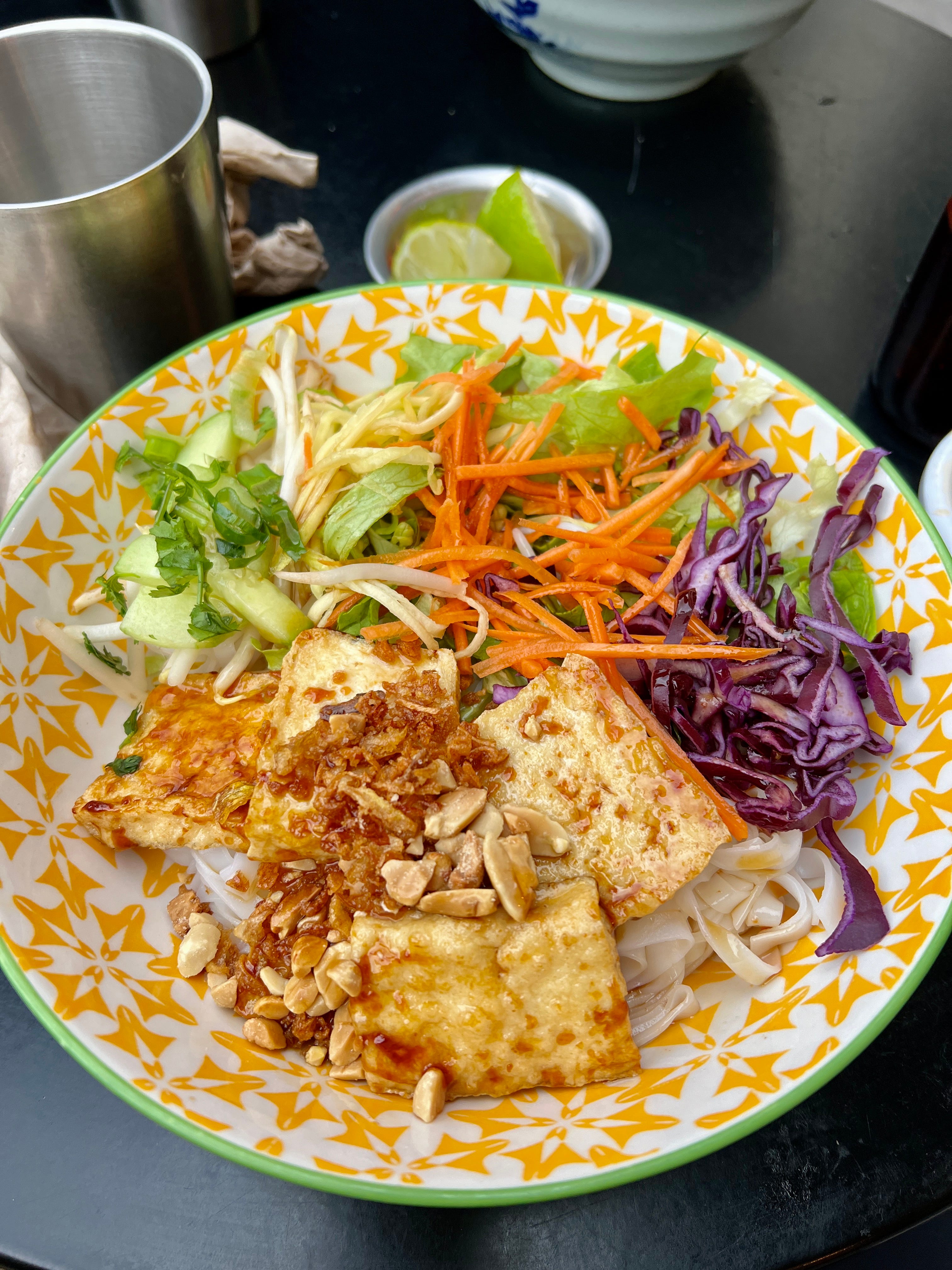
The goal was to adapt what I tried at this restaurant while maintaining its light and refreshing feel. Good news - most of the ingredients should be available at your local grocery store. These ingredients will allow you to taste the elements that make Vietnamese food special: bright, tangy, sweet, and umami. Another bonus - it is much quicker than phở because we won't spend hours making the broth.
Regardless of your experience cooking Vietnamese food, this meal is genuinely super straightforward to make. I want you to feel confident after you read this newsletter, not intimidated! Let's dive in on this dish's quick history and protein breakdown. Or you can head straight to tips and tricks.
What is dry phở?
In Northern Vietnam, dry pho is called "phở trộn," which also translates to mixed pho. A popular choice in the Hanoi summer, dry phở offers various interpretations, with dry chicken pho reigning supreme. This phở forgoes the traditional broth, opting for a concentrated sauce that complements the usual fixings of fresh greens, herbs, protein, and phở noodles. Today, we are indulging in a version featuring tofu and a sweet, salty, and fragrant vegan sauce.
How is this different from bún (aka rice vermicelli)?
While they are both made from rice, the difference is in the size and shape of each noodle. Phở noodles are flat, while bún noodles are round. Another difference between the two is in the sauce: dry phở relies on a concentrated broth, while the sauce for bún is typically nước chấm (an all-purpose fish sauce dipping sauce).
